

NPR and comic book vets team to revive the Golden Age superhero Micro-Face … no, really - lewissaitan
NPR and comic book vets team to revive the Golden Mature superhero Micro-Face … no, very
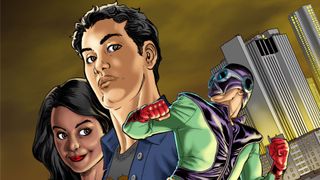
After decades in limbo, the legendary and iconic Propitious Age superhero Micro-Face is finally being revived by equally legendary comic book publishing jumbo the NPR Planet Money Publishing Grouping…
Okay. Hold rising.
We know you've never detected of Little-Face. Perdition, neither did we a hardly a days ago. But he really was a Golden Age superhero.
And the NPR Planet Money Publishing Mathematical group isn't really a thing either. At to the lowest degree it wasn't a affair until recently. And for how long IT remains a thing is thus far to Be seen.
Confused?
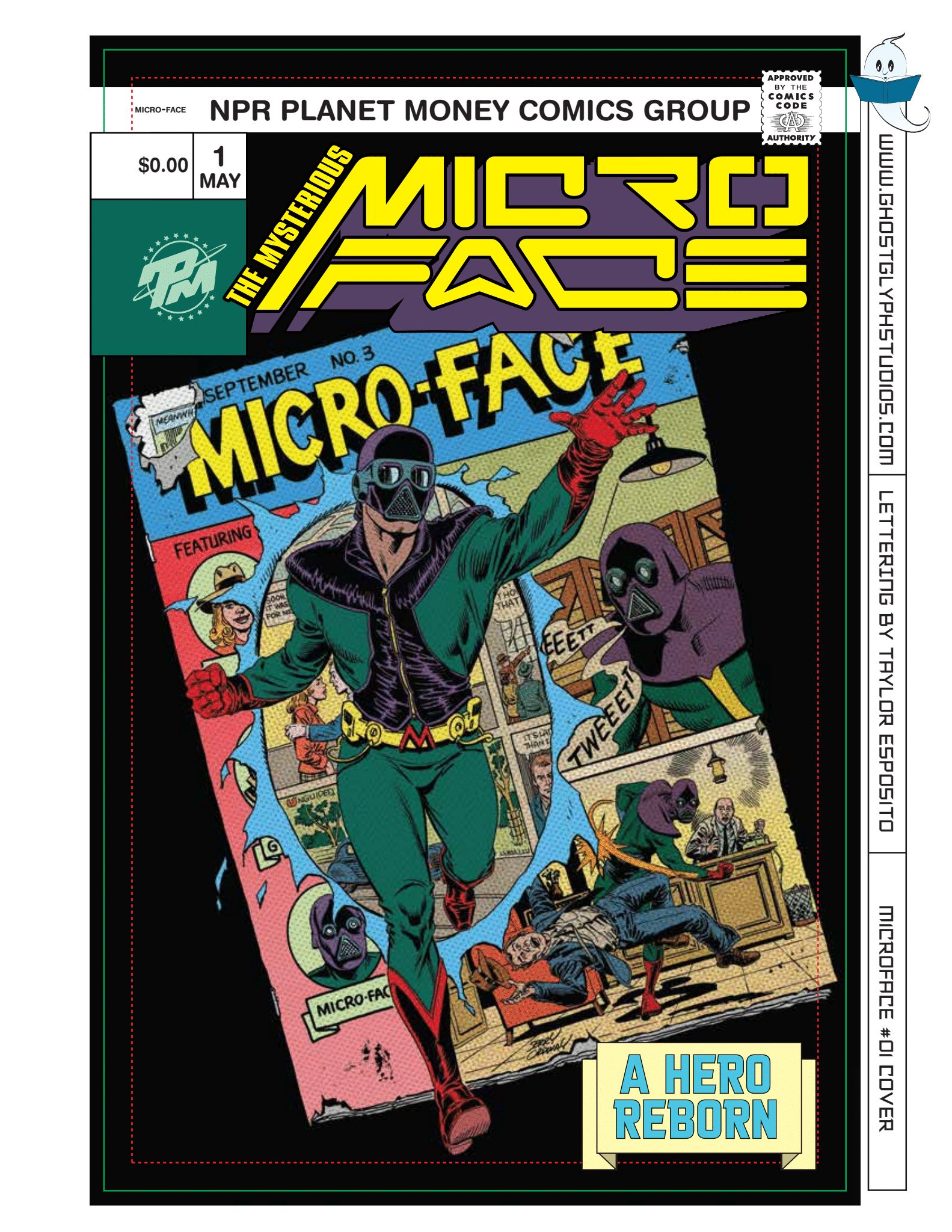
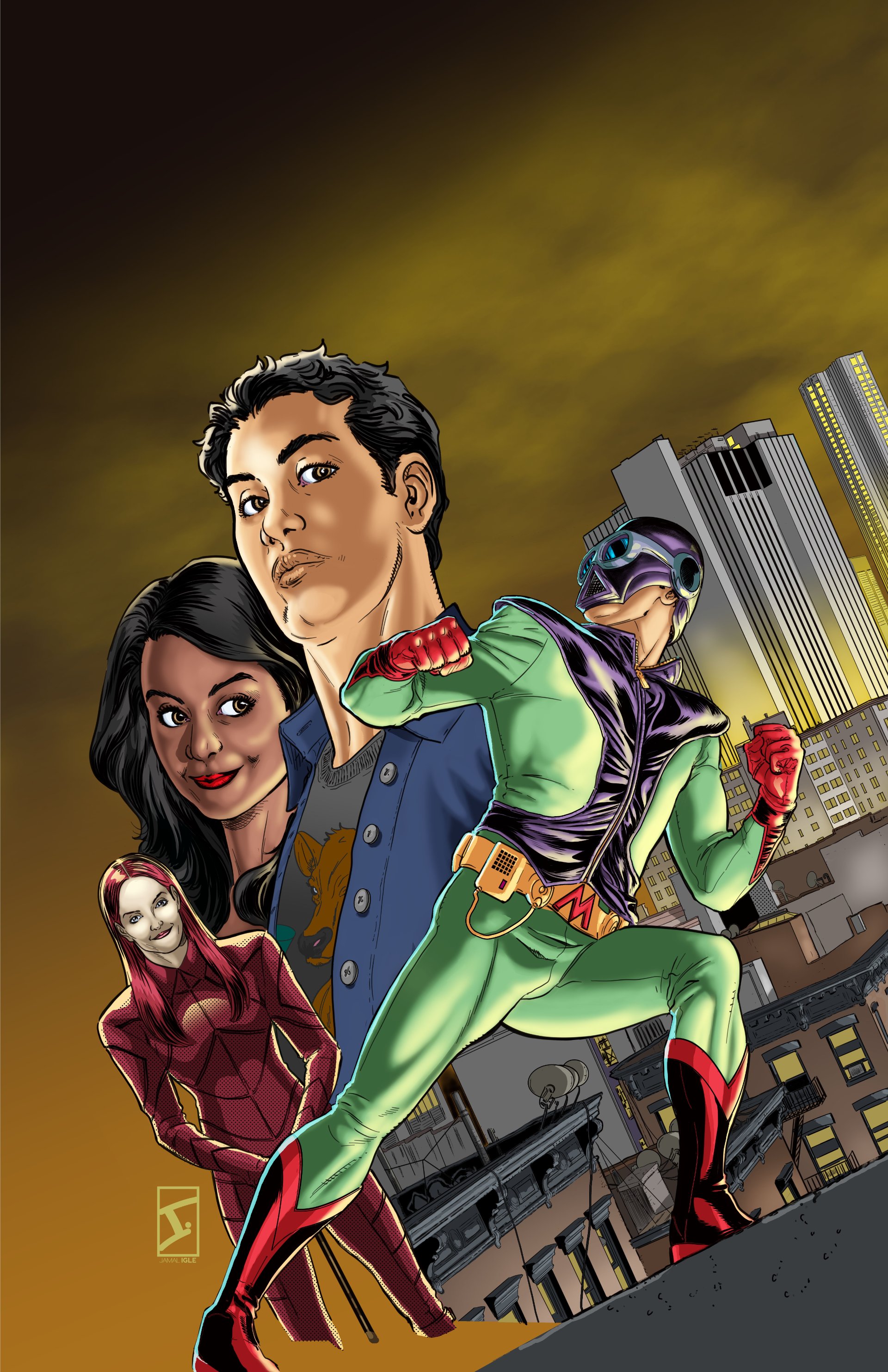
Give us few moments to explain. Suffice IT to aver, you can order the fiber's revival The Myserterious Micro-Aspect #1, written away Alex Segura, penciled by fan-favorite artist Jamal Igle, with a main wrap up and character redesign from legendary veteran Jerry Ordway, colored by Ellie Wright, and lettered by Taylor Esposito right now.
As to how it all came about...
It all started earlier this year when Segura, the novelist, comic Word writer, ex-ex DC and Archie Comics executive, and current Oni-Lion Forge senior VP of sales and marketing was approached past his friend Kenny Malone, a reporter for National Public Radio's (NPR) popular Planet Money podcast, which focuses on explaining complex business and finance matters in entertaining and sport ways.
You know, I Don River't know sometimes how I wind up with projects like this [laughs]. I think it's pretty considerably known that I love a gainsay. The fun for ME really comes with putting the art together. I'm victimization new tools and changing things up a bit, visually. I as wel love the idea of delivery comics to a non-orthodox comics audience - like the listeners of Planet Money.
Jamal Igle
Malone wanted Segura to guest on an episode as part of a series on intellectual property in comics books, detailing how characters can embody very profitable through media and licensing.
Edmond Malone and his atomic number 27-host Robert Smith had a "big idea" for the podcast - to actually buy a grapheme from an established comic Quran company, and then try to permission it tabu for television, movies, and merchandise for giant money.
Still at Archie Comics at the metre, Segura's role on the podcast was to provide his insight Eastern Samoa a comic book executive director representing iconic characters. Edmond Malone and Kate Smith actually asked to purchase a small-known Archie character, a request Segura had to decline.
"I think I said 'I am not allowed to say yes but I can certainly say no'," recalls Segura, explaining to Planet Money hosts that "any graphic symbol, from A-list to D-list, is one great level off from being a cardinal-dollar franchise. There was zero upside for a company to sell off sophisticated place. We're in the age where you require more highbrow property, non less."
And while episodes went over well and the audience response to the series was positive - their ambitious conceit wasn't fulfilled - they weren't able to assume a graphic symbol.
Segura then advisable an alternative path...
"The Golden Age of comics is untidy with perplexed characters and ideas that directly domiciliate in the public domain - meaningful the original copyrights and trademarks cause lapsed and sufficient time has passed that they can't be renewed," Segura explains.
So, for characters of this kind, the elementary premises are up for grabs by anyone. You dismiss make new work based on the innovational idea then right of first publication and trademark your version of the public region fibre. Edmond Malone and Smith took to the estimation and therewith in mind, went along a hunt for their own superhero.
What they found is the selfsame obscure superhero onymous Small-Face WHO made a dozen operating room so appearances in the '40s, created by writer-artist Allan Ulmer. Ulmer was an illustrator of magazine and newspaper features like The Shadow, The Green Hornet, and Tarzan and later Drew comic books and covers in the '40s and '50s for publishers such every bit Holyoke Publishing (Blue Beetle), DC (Dale Sir Arthur John Evans Comics), and Marvel precursor Timely Comics (Red Warrior) before his career turned to the fine arts in the '60s. He passed absent in the '80s.
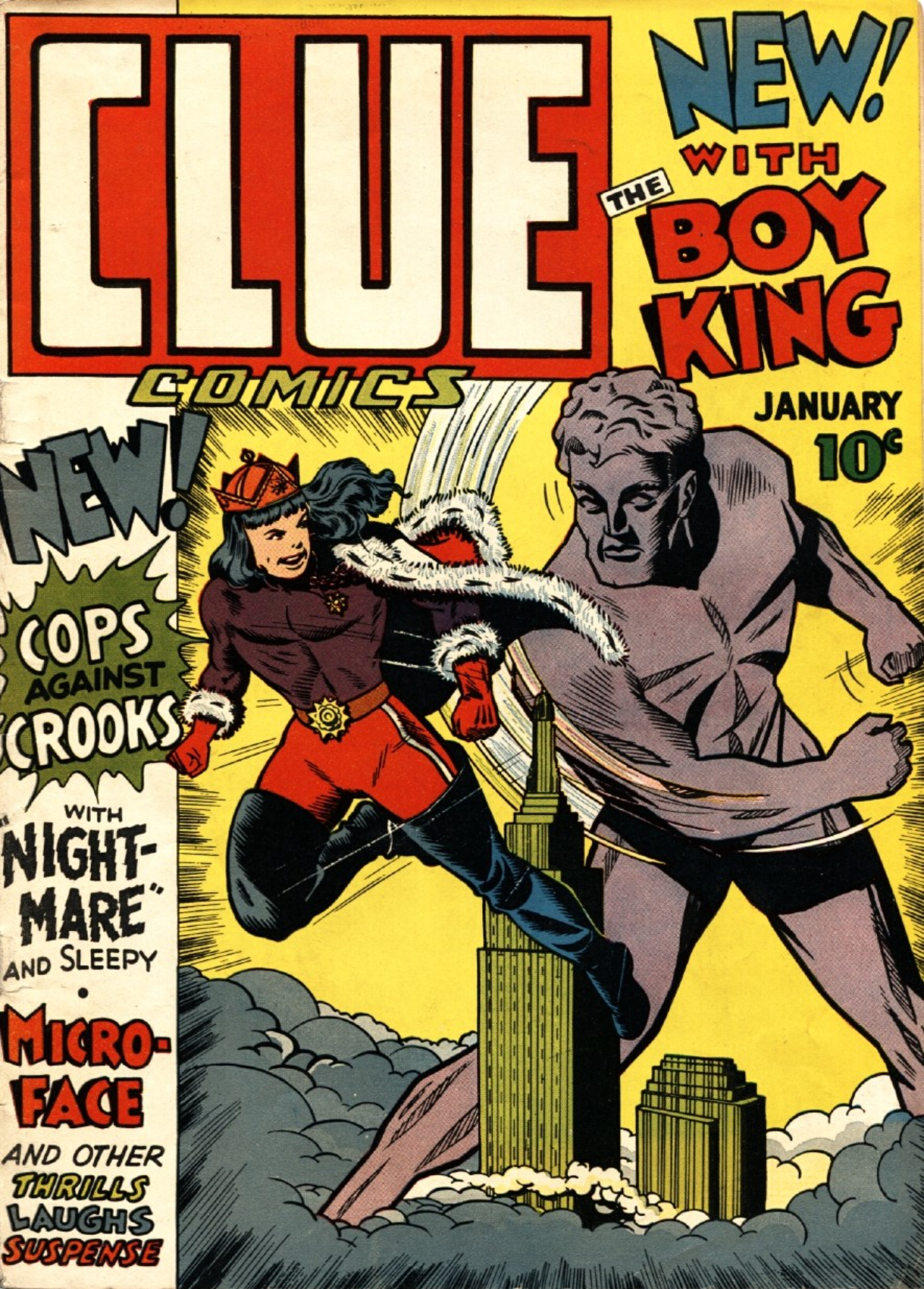
Created in 1943 for the publisher Hillman in Clue Comics #1, Gobbler Wood AKA Micro-Face had sound-based powers (no, atomic number 2 didn't possess a super-small face … we'll develop thereto in a moment) and the Satellite Money guys liked the idea that a business podcast for a unexclusive radio station was active to get an audio-centric character.
Because Segura has a background A a comic book writer, editor, publishing executive director, and comprehensive Swiss Ground forces Knife of comic book creation, Malone and Smith asked him if atomic number 2'd write a new Little-Face fib and help put down together a notional team.
"It was such a unique, weird, fun project - meta and interesting - that I couldn't order no," Segura explains.
"When we settled on Small-Face I explained that we benevolent of had three paths to take," Segura says, "We could either retain the original Micro-Face's adventures as if no time had passed and make it a menstruation piece operating room we could relaunch the character as a modern, new idea with no ties to what came before."
But the one that genuinely resonated with Segura and the podcast guys was a third option - to make a new legacy version of Little-Fount, one that was tied to the original's history but was a new character set in the modern day. OH, and they also thought it'd beryllium unqualified if the account touched connected the public domain 'macrocos' of heroes in a way that was entertaining to read, just also a playfulness meta-commentary on intellectual property.
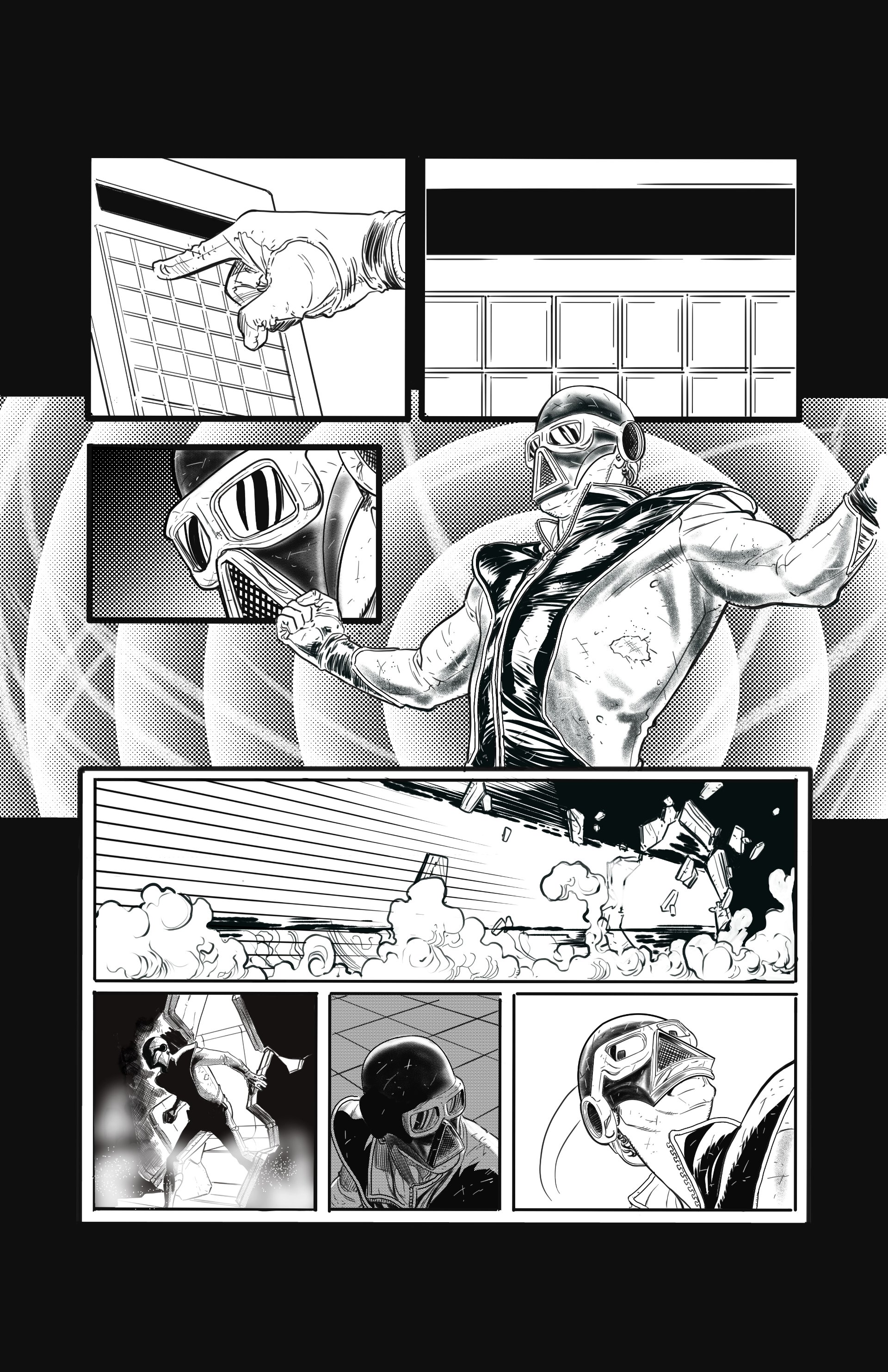
"Since information technology's an NPR/Planet Money humourous, we also wanted to make a point it had a fair dea of information," explains Segura. "Non equally an educational comic, but a story that landed in the business world. But the idea that we could add to Micro-Face's legacy while attractive in that fun exercise felt right. One thing Kenny and Robert did that was really awesome is they reached bent Allan Ulmer's daughter and got her blessing to continue the story. It's a really heartwarming parting of the podcast."
Many of the details canful embody heard on the podcast or you can read the transcrip t including Segura's first reaction when he was first introduced to Micro-Face ("That's an unfortunate cite.")
Despite that first reaction and the meta-context of the whole project, Segura says his revival of Micro-Face is never tongue-in-cheek Oregon mocking of the idea.
"We play the story untwisted,'' he explains, saying he liked the estimate of playing with the bequest of the original character while also wanting to create a unaccustomed, Latinx hero. "Surface-to-air missile Salazar, a radio reporter in Modern York, discovers he's the grandson of the original Micro-Present. He learns this Eastern Samoa he tries to track down the someone that's (corporate-ly) predatory small, WWII-earned run average companies for unknown reasons. Equally Surface-to-air missile domiciliation deeper into the financial crimes, he learns of his own legacy, and circumstances get godforsaken enough that he has to put on the helmet and do some good himself."
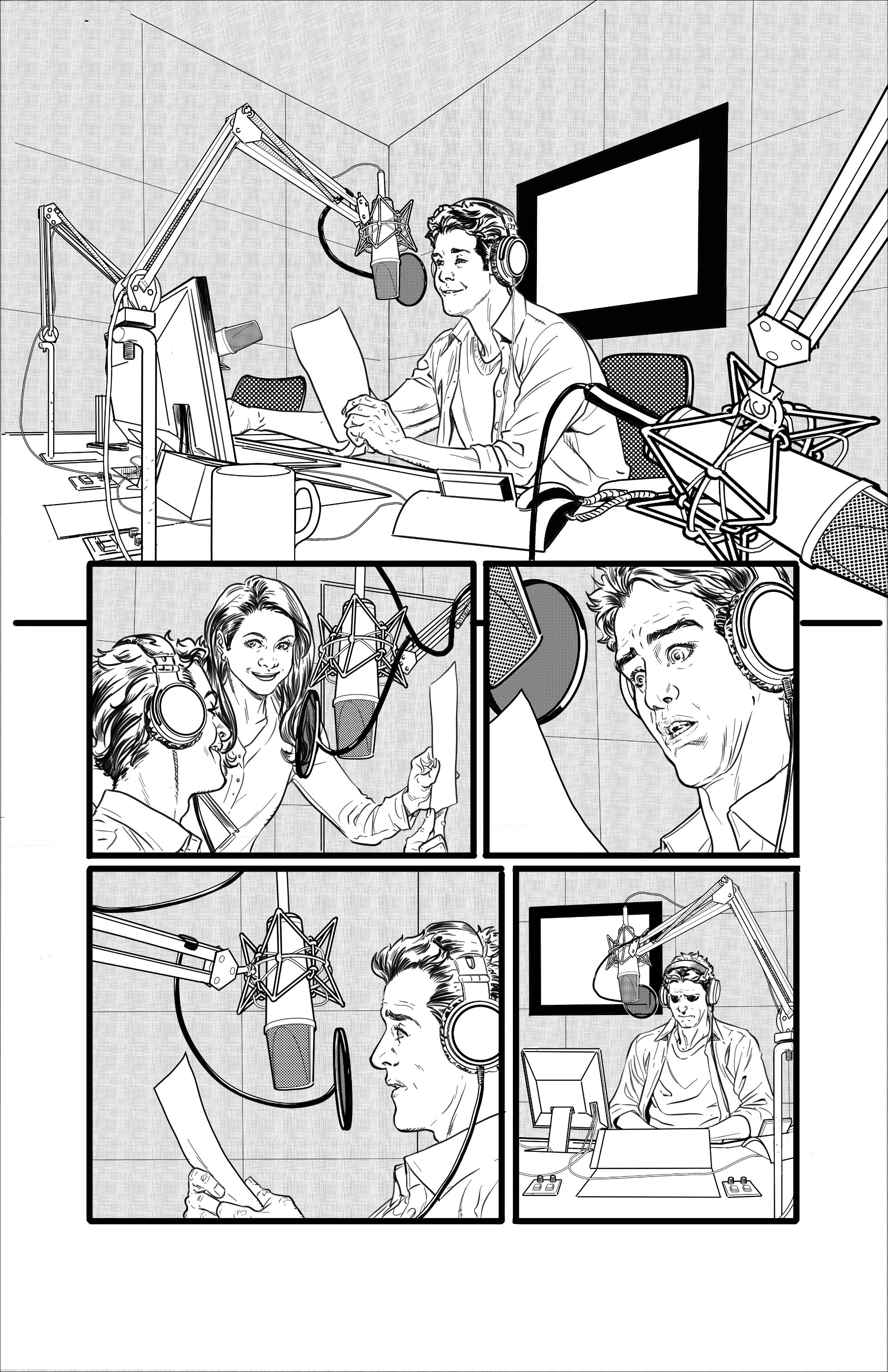
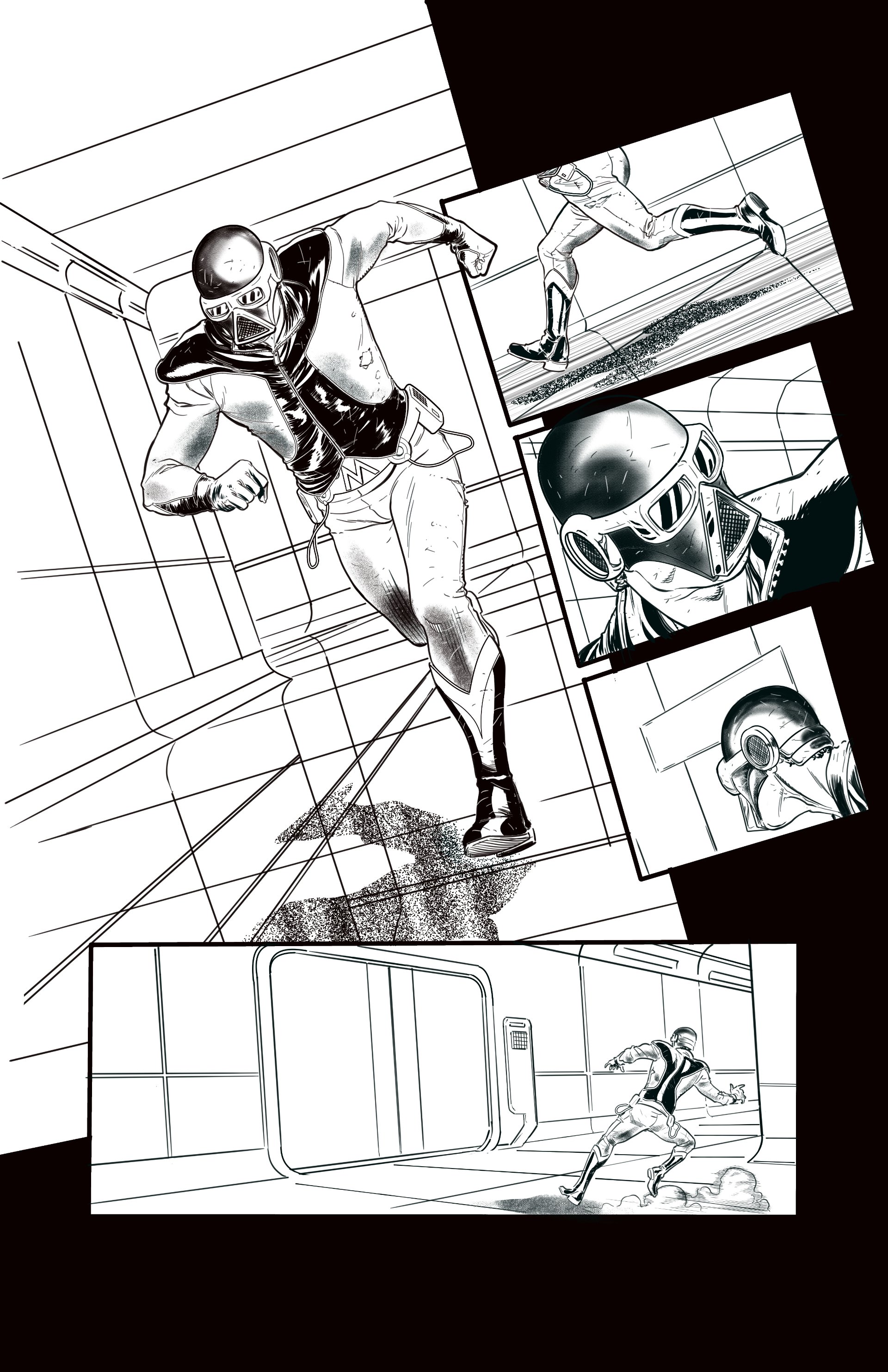
The helmet is the source of the superhero powers of Micro-Face (a language unit play on 'mike'). A sort of surround sound projector in front its time, Micro-Fount can produce sound personal effects to frighten and disorient criminals. As described in the podcast, in an precocious pilot narrative he projects the sounds of approaching police force cars to obnubilate criminals He's unpeaceful.
Segura whose next prose novel Secret Indistinguishability is well-nig a fictional comic book company and a murder that interferes with the creation of a superhero, acknowledges Small-Face fell into the public domain because helium didn't resonate with readers when atomic number 2 was created, but also heeds the advice of his character designer and cover creative person Boche Ordway.
Look at the a couple of panels from the freehanded comics, I approached the ray-design as a means to keep the kind of kooky look, but streamline it a bit. The goggles and voicebox were pretty much the same, but I felt that some of the new version's skin tone should be shown, as it seemed an portentous story point As to the new-sprung character's ethnicity.
Jerry Ordway
Ordway was surprised atomic number 2 has never heard of Micro-Aspect, every bit he considers himself very well-known with the Golden Senesce of comics, but as he expressed on the Planet Money podcast, helium believes there aren't really bad characters.
"You can e'er find something useful," Segura agrees. "And for me, the idea of this hero existing in the past was secondary to who the guy under the helmet was. I wanted to child's play with personalised legacy as much American Samoa larger-than-life legacy, I guess. Early on, we realize that Sam became the person he is because of his grandad. His granddad was Sam's substantial hero. So when atomic number 2 learns that atomic number 2 put happening a big microphone helmet and punched criminals, it's just the icing on the coat - and the prod he needs to become a hero himself."
American Samoa to where the project goes from here, Segura believes there is potential for Micro-Aspect.
"Component of the uniqueness of the project is that it's merely being sold-out via NPR - you can only get it via their store," he explains. "I think that leaves a few Key markets untouched, namely comic shops, bookstores, and digital. The orders have been really, really strong, so I call back in that respect's a market for more, or at the very least versions that plump to retailers and some other channels. Those are things NPR is considering, I think, sol we'll see."
As to whether they'll be more, Segura says he doesn't want to contribute overmuch away, just that IT's written as the get-go issue of a new serial publication.
"Time will tell where we go beyond this first 40-page comic, only I'd love to be a part with of whatever's next," He says. "It's been then so much playfulness."
No more, Micro-Face ISN't on our lean of the best non-Marvel operating room D.C. comic account book superheroes or our list of the best powerless superheroes . But hey, possibly someday.

Source: https://www.gamesradar.com/npr-and-comic-book-vets-team-to-revive-the-golden-age-superhero-micro-face-no-really/
Posted by: lewissaitan.blogspot.com
0 Response to "NPR and comic book vets team to revive the Golden Age superhero Micro-Face … no, really - lewissaitan"
Post a Comment